If you’ve ever walked through a modern airport terminal, a state-of-the-art school auditorium, or even a sleek grocery store interior, you’ve probably glanced at perforated metal without noticing it. It’s the patterned metal grilles lining ceiling vents, the decorative panels dividing open office spaces, and the rugged grates covering building facades that let light and air pass while adding structural integrity. As a perforated metal supplier, I get asked a lot of questions about this material, but one that comes up again and again—especially from architects, contractors, and building inspectors—is: How does perforated metal hold up in a fire? It’s a fair question. Traditional solid metal is often assumed to be fire-resistant, but perforated metal has gaps, holes, and cutouts that make it look different. Can it still perform the way buildings need it to when temperatures spike? Let’s break this down, no industry jargon, just the real-world science and practical insights I’ve picked up after 12 years working with perforated metal for projects ranging from small retail fit-outs to large-scale industrial facilities. Perforated Metal

First, let’s start with the basics: what actually makes a material fire-resistant? Most people think it’s about not burning, but that’s not entirely accurate. For building materials, fire resistance has three core components, per the National Fire Protection Association (NFPA), the group that sets most U.S. fire safety codes. First, stability: the material has to stay structurally intact for a set amount of time when exposed to extreme heat, so it doesn’t collapse and block escape routes or spread fire. Second, integrity: it can’t let flames or hot gases pass through it to the other side. Third, insulation: the side not exposed to fire can’t get so hot that it ignites materials on the opposite side, usually kept below 140°F (60°C) for most common building materials.
Now, let’s talk about solid metal, because that’s the benchmark everyone uses. Carbon steel, the most common solid metal for construction, starts to soften at around 750°F (400°C), and by 1,500°F (815°C), it loses most of its structural strength—enough that a steel beam can bend under its own weight. Stainless steel is a little better, softening around 1,900°F (1038°C), while aluminum is the weakest, melting at just 1,220°F (660°C). That’s why you see steel beams wrapped in fire-resistant drywall or sprayed with intumescent coating, which expands when heated to insulate the metal and slow its temperature rise.
So where does perforated metal fit into this? The key here is that perforated metal is still metal. The holes don’t change the base material’s core fire properties—they just change how heat and air move through it. Let’s take the most common perforated metals we supply: carbon steel, stainless steel, and aluminum.
Carbon steel perforated sheet, for example, has the same composition as solid carbon steel. If you leave a solid carbon steel beam and a perforated carbon steel panel side by side in a furnace set to 1,200°F (649°C), the solid one will reach that temperature a tiny bit faster than the perforated one, because the perforated metal has less mass to heat up. Wait, that’s a point many people miss: perforated metal has less total metal per square foot than solid, so it heats up faster, right? No, not always. The holes create more surface area exposed to heat. For example, a perforated panel with ½-inch holes on ¾-inch centers has about 30% open area, meaning 70% metal. So a 4×8 foot sheet of that panel is 56 square feet of metal, while a solid sheet is 32 square feet of metal. More surface area means more areas absorbing heat, so the panel’s temperature rises slightly quicker than solid metal of the same gauge. That’s a critical detail, because that means perforated carbon steel will start softening a few minutes earlier than solid carbon steel, all else being equal.
But what about integrity? That’s where perforated metal actually has an unexpected advantage over solid metal in some applications. Let’s say you have a fire on one side of a wall. Solid metal will block flames, but it can also trap hot gases. If the metal warps or cracks, those gases can shoot through, spreading smoke and fire faster. Perforated metal, though, has gaps that let hot small gases escape. That means the pressure buildup on the fire side is lower, so the panel is less likely to warp or burst open. I’ve seen this first-hand on a project for a local warehouse a few years back: the building had perforated metal vent grates on its loading dock walls, and a small electrical fire started near one. The solid steel wall panels nearby warped and bubbled, but the perforated grates stayed intact—their open design let hot steam and gas vent out instead of building up. The fire was contained in 10 minutes, while the warped solid panels required a full replacement. The perforated ones? We just wiped them down and reused them.
But wait, that’s not a free pass. The open area of the perforated metal matters a lot. If you have a panel with only 5% open area—tiny, closely spaced holes—it acts almost like solid metal for fire purposes, because the gaps are so small that flames and hot gases can’t pass through easily. But if you have a panel with 50% open area, the holes are big enough that flames could flicker through, or hot air could pass through to the other side. For that reason, perforated metal isn’t typically used as a primary fire barrier on its own. But it works extremely well as a secondary element: ceiling panels, wall cladding, vent covers, or even part of a fire-rated assembly when combined with other materials.
Stainless steel perforated metal is a different story. Most stainless steel used in perforated products is 304 or 316 grade, both of which have much higher heat resistance than carbon steel. 304 stainless softens at around 1,700°F (927°C), and 316 is even higher, at 1,850°F (1010°C). That means perforated 304 stainless won’t start losing structural strength until it’s exposed to much higher temperatures, compared to carbon steel. We supplied 400 square feet of perforated 304 stainless ceiling panels for a hospital operating wing last year, and the fire inspector specifically noted that since the panels were mounted on a 1-hour fire-rated ceiling grid, their stainless steel composition meant they didn’t add extra heat load to the assembly. That’s important for hospitals, where fire code requires that ceiling materials don’t compromise the integrity of the ceiling’s fire rating.
Aluminum perforated metal is the weakest link, fire-wise, because it melts at a much lower temperature, around 1,220°F (660°C). That’s well within the range of temperatures a standard building fire can reach, which is usually between 1,000°F (538°C) and 2,000°F (1093°C) within 15 minutes of ignition. So aluminum perforated metal isn’t recommended for applications where it could be exposed to open flame, like near furnaces, commercial kitchens, or exposed ceiling spaces in retail stores. But aluminum perforated metal works great for things like decorative grilles for HVAC vents in office spaces, where they’re never exposed to direct heat and just need to be durable for everyday use. The low melting point also means aluminum perforated metal doesn’t soften and warp at lower temperatures, so it won’t block airflow from vents during a normal overheat event, which is a plus for HVAC systems.
Another big factor I talk about with architects is coating. A lot of perforated metal we supply is pre-coated with powder coating, which adds another layer of fire resistance. Powder coating is a durable, dry finish that can withstand temperatures up to 400°F (204°C) for short periods, and when exposed to higher heat, it doesn’t release toxic fumes like some wet paint does. For applications near heat sources, like above restaurant stoves, we recommend a high-heat powder coating that can handle temperatures up to 1,200°F (649°C) without peeling or discoloring. That extra layer doesn’t make the metal itself fire-resistant, but it does slow down the rate at which heat can get through to the base metal, giving you a little more time to react if there’s a fire.
I also get asked a lot about perforated metal used in facade cladding. That’s a super common application—modern buildings use perforated metal facades to create privacy, block glare, and add texture. But what happens if a fire starts on the outside, like from a wildfire or a neighboring building’s fire? The same rules apply: the base metal’s composition is key, and open area matters. Carbon steel facades will heat up faster than stainless steel ones, but the perforations actually help here too, because they let wind and heat pass through the facade instead of trapping it against the building’s exterior walls. We worked on a college dorm facade project a few years ago, where the architect chose perforated 316 stainless steel for the exterior, specifically because the stainless steel’s high heat resistance would hold up better than carbon steel in the event of a nearby fire, and the perforations would reduce wind load on the facade during a fire-related wind event. The building passed all local fire code tests for exterior cladding, and we’ve had no issues in the three years since installation.
Now, let’s get real about code requirements, because that’s what everything comes down to for builders and suppliers. NFPA 70, the National Electrical Code, and NFPA 285, the Standard Fire Test Method for Exterior Nonstructural Wall Assemblies, are the main codes governing fire resistance for building materials. Perforated metal is classified by its base material, not by its perforations. So a perforated carbon steel panel is classified the same way as a solid carbon steel panel of the same gauge and material grade. The perforations just mean that when you’re testing a fire-rated assembly that includes perforated metal, you have to account for the open area when calculating heat transfer. For example, a 20-gauge solid carbon steel panel has a heat transmission rate of X, while a 20-gauge perforated carbon steel panel with 30% open area has a heat transmission rate of 0.7X, because there’s less metal to transfer heat. That’s a number fire inspectors and architects build into their designs, so it’s not a problem as long as the right calculations are done.
One common misconception I hear is that perforated metal is more flammable than solid metal. That’s just not true. Metal doesn’t burn—regardless of perforations. Flammability applies to materials that catch fire and fuel combustion, like wood, plastic, or fabric. Metal melts or softens when heated, but it doesn’t ignite. So perforated metal is no more flammable than solid metal. The only difference is how it responds to heat, and as we’ve talked about, that response depends entirely on the base material, gauge, open area, and any coating applied.
Let me share a recent example that drives this home. Last year, we supplied perforated carbon steel and perforated stainless steel panels for a 5-story office building in downtown Chicago. The project’s general contractor came to us early on, worried that the perforations would compromise the ceiling’s 2-hour fire rating. We worked with their fire engineer to run simulations: we calculated that the perforated panels, because they have less metal mass, would only add 5 minutes to the time it takes for the ceiling’s unexposed side to reach 140°F (60°C)—well within the 2-hour rating required. We also recommended a high-heat powder coating for the panels, which added an extra layer of protection. The project passed its fire inspection on the first try, and the building is now fully occupied, with the perforated panels looking as good as the day they were installed.
So, to circle back to the original question: What is the fire resistance of perforated metal? It’s not a one-size-fits-all answer, but here’s what I tell every customer who asks:
- If you need something to hold up to extreme heat for a long time: Go for perforated stainless steel, especially 304 or 316 grade. It will soften at temperatures that are well beyond what most building fires reach, and its open design helps reduce pressure buildup if heat is present.
- If you need a more affordable option for low-heat areas: Perforated carbon steel works great for applications where it won’t be exposed to direct flame, just make sure the gauge is sufficient for the job and you add a proper coating if needed.
- If you need something for decorative or low-heat applications: Perforated aluminum is fine, just don’t use it near heat sources like stoves or furnaces.
- And remember: Perforated metal is not a primary fire barrier, but it’s an excellent secondary component, when designed correctly for fire code requirements.
As a perforated metal supplier, my job isn’t just to sell metal panels. It’s to make sure the products we supply meet both the aesthetic needs of a project and the safety needs of everyone who will use the building. I’ve seen too many projects cut corners on fire resistance, and I don’t want that to happen with any of the materials we work with. If you’re an architect, contractor, or property manager working on a project and you have questions about which perforated metal is right for your fire-related needs, I’m here to help. We can walk through material options, code requirements, and get you the samples and specifications you need to make an informed decision. All you have to do is reach out to discuss your project details.
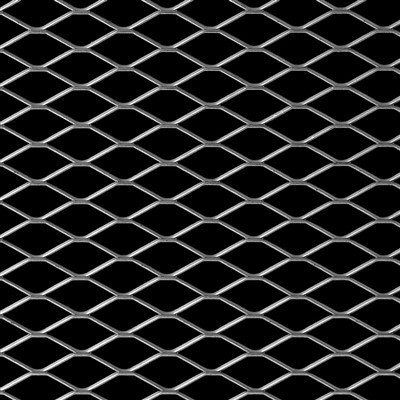
Flattened Expanded Metal References
NFPA 285, Standard Fire Test Method for Evaluation of Fire Propagation Characteristics of Exterior Non-Load-Bearing Wall Assemblies Containing Combustible Components
NFPA 70, National Electrical Code, Article 310 for Conductor Heat Transfer Rates
ASTM E119, Standard Test Methods for Fire Tests of Building Construction and Materials
Material Properties for Stainless Steel and Carbon Steel, ASM International Handbook Volume 1: Properties and Selection: Irons, Steels, and High-Performance Alloys
Anping Yilida Metal Wire Mesh Co., Ltd.
Anping Yilida Metal Wire Mesh Co., Ltd. is one of the most reliable perforated metal manufacturers and suppliers in China, also supports customized service. Please feel free to buy bulk high quality perforated metal made in China here from our factory.
Address: Wire Mesh Development Zone, Anping, Hebei Province, China
E-mail: sales@wiremesh-yg.cn
WebSite: https://www.yilidametal.com/
