Hey there, if you’ve ever ordered turned carbon steel parts and ended up with something that snapped too easily, rusted out in a month, or cost way more than you needed to spend—yeah, I’ve been there too. For 12 years, I’ve run this shop that turns out carbon steel parts for everyone from small machine shops to big agriculture equipment brands, and I’ve seen way too many folks pick the wrong steel because they just googled “carbon steel for turned parts” and stopped at the first result. Carbon Steel Turned Parts
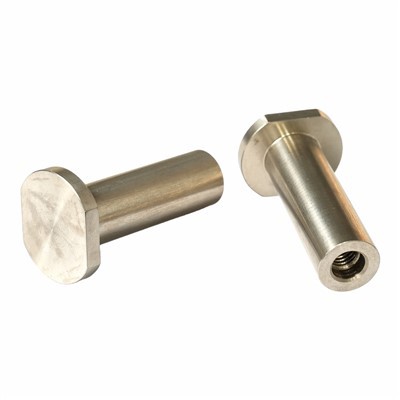
This post isn’t gonna be a dry textbook list of alloys. I’m gonna break down exactly what I talk through with every customer when they reach out, because at the end of the day, choosing the right carbon steel for turned parts isn’t about memorizing numbers—it’s about matching the steel to what your part actually does. Let’s start with the basics that no one tells you: carbon steel is way simpler than stainless steel, but that makes picking it trickier because there’s no fancy chromium to hide flaws. It’s just iron and carbon, sometimes a tiny bit of manganese, and that’s it. More carbon = harder, stronger, but also more brittle. That’s the core rule I live by, and every part we turn is built around that.
First, let’s talk about the biggest question I get: what’s your part gonna be used for? Let’s use real examples because that’s how I learn, not just theory. Last quarter, a customer came to us needing small pins for a farm tiller—they had snapped constantly in field use, and their old supplier was sending 1018 steel. 1018 is the workhorse of low-carbon steel, super easy to turn, cheap, soft enough that it machines like butter. But for a pin that’s getting twisted and yanked on all day? 1018 is too soft. It’s got like 0.18% carbon, so it doesn’t harden enough through heat treating, and it bends before it breaks. We switched them to 1045 steel, which is medium carbon—0.45% carbon. We turned it the same way, and then we did a medium temper on it, so it’s strong enough to take that torque and not snap. They haven’t had a broken pin since. That’s the first rule: don’t pick steel based on machinability alone. Pick it based on load.
Another example: a guy making small sensor housings for industrial machinery. These housings get drilled, tapped, turned on the lathe, and they live in a damp warehouse. He came to us panicking because his last parts rusted through after two weeks, and he was sure he needed stainless steel. But stainless is way harder to turn, way more expensive, and his housings don’t need high strength—they just need to not rust, and be easy to machine. We suggested 1018 with a zinc phosphate coating. Wait, zinc phosphate? Yeah, that’s not a steel grade, but it’s a finishing step that seals the 1018 so it doesn’t rust, and it’s way cheaper than 304 stainless. He saved 40% on his parts and they haven’t had a rust issue in six months. So that’s rule two: don’t overlook finishes that can fix a steel’s weakness.
Wait, let’s talk about the different types of carbon steel, because people mix up low, medium, high carbon all the time like they’re interchangeable, and they’re not. Let’s keep this simple: low carbon is under 0.30% C. That’s 1008, 1010, 1018. These are the easiest to turn—sharp tools slice through them like warm butter, no tool wear, no weird built-up edge. They’re soft, ductile, so they bend instead of break. Perfect for parts that don’t carry a heavy load: brackets, fasteners, housings, pins that aren’t under constant stress. The catch with low carbon is you can heat treat them to harden the surface, but you can’t harden the core. So if you need a surface that’s wear-resistant, low carbon carburized (heat treated to add carbon to the outer layer) works great. That’s what we use for small gears that spin on a shaft—hard shell, soft core so it doesn’t snap when it hits something.
Medium carbon is 0.30% to 0.60% C. That’s 1035, 1040, 1045, 1050. This is the sweet spot for most turned parts. They’re still pretty easy to machine, but they have enough carbon to be heat treated all the way through. So if you need a part that’s strong, tough, and can take some wear—axles, connecting rods, shafts, the tiller pins I mentioned earlier—this is your go-to. The mistake people make here is going too high for no reason. I had a customer order 1055 steel for a small clip that holds a door on a conveyor. 1055 is high carbon, super hard, way more brittle. When we turned it, he had to ream the holes because it was so tough, and then the clips kept cracking when he bent them. We suggested 1035, which is medium, softer, easier to machine, and still strong enough for a conveyor clip. He saved on machining time and didn’t have to deal with cracked parts.
High carbon is over 0.60% C. That’s 1075, 1095. This is super hard, wear-resistant, but really brittle. You only need this for parts that are gonna slide or rub against something all day, like springs, blades, or cutting tools. The only time we use this for turned parts is when a customer specifically needs a blade for a paper cutter or a skid for a heavy machine that’s gonna grind against concrete. You have to be careful with high carbon—machining it wears out tools fast, and it’s easy to crack if you heat treat it wrong. Most of our customers don’t need high carbon, so it’s not our first pick, but it’s a lifesaver for the right job.
Now, here’s the part that most blogs skip: how does your turning process change with different steel? Because it’s not just picking the grade—you have to adjust how you turn it to get a good part. Low carbon (1018) is great, but if you run your lathe too fast, you get this weird built-up edge on the tool, where little bits of steel stick to the end, and it leaves a rough surface on your part. So we run 1018 at a moderate speed, use a sharp carbide tool, and we get a finish that’s almost polished without any extra work. Medium carbon (1045) is a bit tougher, so you need a tool that can handle more pressure—we use a coated carbide, and slow down the feed rate a tiny bit. If you go too fast on 1045, you’ll get a chatter mark on the part, which means it’s not as strong as it should be. High carbon? We use ceramic tools for that, because they stay sharp longer, and we heat treat it after turning, not before—heat treating high carbon before turning would make it so hard you can’t shape it. That’s a common mistake: heat treat first, turn second, for most carbon steel, and save surface hardening for parts that need it.
Wait, let’s talk about rust and corrosion, because that’s a huge one. A lot of people ask us “is carbon steel rusty?” Yeah, it is, unless you coat it. But you don’t need to switch to stainless for every part. Like I said earlier, zinc phosphate is super common—it’s a thin coating, cheap, it prevents rust, and it’s easy to paint over if you need to. If you need something a bit tougher, black oxide coating is another option, it’s dark, resists rust, and it’s cheaper than zinc. Only if your part is gonna be in saltwater, or a super harsh chemical environment, do I suggest stainless, and even then, we’ll work with the customer to see if a coated carbon steel can do the job. Last year, a seafood processing plant came to us needing parts for a conveyor that runs in saltwater. They thought they needed 316 stainless, which is crazy expensive for turned parts. We tried 1018 with a powder coat that’s rated for saltwater, and it lasted twice as long as the stainless they had been using, and cost half as much. That’s the kind of win we care about—giving customers what they need, not what they think they need.
Another thing to consider: quantity. If you need 100 parts, 1045 is easy to machine, no problem. If you need 10,000 parts, you might want to go with a free-machining carbon steel, like 12L14. That steel has a tiny bit of lead added, which makes it way easier to machine, so you can turn parts faster, no tool wear, lower cost. The downside is it’s not as strong as 1045, so you only use it for low-load, high-quantity parts. We use 12L14 all the time for small bolts and nuts that we turn in bulk—saves our customers a ton of money on machining time.
Wait, let’s circle back to real customer pain points, because that’s what this is about. I’ve had so many people come to us saying “my last supplier used the wrong steel and my parts failed.” The most common mistake is picking the cheapest steel just because it’s cheap. 1018 is cheap, but if your part needs to take a load, it’s gonna fail. Another mistake is over-specifying: buying 1045 when you only need 1018, which wastes money on material and machining time. And then there’s the mistake of not talking to your supplier about the part’s actual use. We don’t just take an order for “1000 turned pins”—we ask what they’re holding together, how much weight they’re under, where it’s gonna be used. That’s how we make sure the steel is right.
Let me give you a quick cheat sheet, no fancy jargon, for the most common turned parts:
- Housings, brackets, low-load fasteners: 1018 or 12L14 (if high quantity), zinc coated.
- Shafts, axles, connecting rods, high-load pins: 1045, medium heat treated.
- Gears, wear parts: 1018 carburized or 1045 through hardened.
- Blades, cutting tools, high-wear parts: 1095, heat treated after turning.
But here’s the thing—this cheat sheet works for most jobs, but it’s not set in stone. Every part is a little different. Last month, a customer needed a part for a medical device that had to be non-magnetic. Wait, carbon steel is magnetic, but if we use low carbon 1018, it’s only slightly magnetic, and we can use a special passivation coating that makes it non-magnetic enough for their use. They didn’t need stainless, which would have cost 3x as much. That’s the kind of custom call we make every day.
So when you’re picking carbon steel for your turned parts, don’t just go by the grade number. Ask yourself three questions: 1) How much stress/load is this part gonna take? 2) Where is it gonna live—indoors, outdoors, wet, dry? 3) How many parts do you need? Those three questions will narrow it down way better than any google search.
At the end of the day, choosing the right carbon steel isn’t rocket science. It’s about matching the steel’s properties to what your part needs to do, not what the marketing says, not what’s cheapest, not what’s most common. If you’re working on a new project and you’re not sure which steel to pick, hit us up. We don’t push the most expensive steel, we push the one that works for your part and your budget. Whether you need a custom turned part for a farm, a machine, a medical device, whatever, we’ve got the experience to help you pick the right carbon steel, no confusing jargon, no hidden fees. Just straight talk, good parts, and someone who’s been doing this long enough to know what works.
Wait, before I wrap this up, let’s make sure I didn’t skip anything. Oh—tooling? No, that’s on our end, but I should mention that if you’re a machinist picking your own steel for turned parts, check with your tool supplier too. Some high carbon steels need specific tools, and if you’re using cheap tools, you’ll have a bad time. But if you’re ordering parts from a supplier like us, we take care of that—we use the right tools for the right steel, so you don’t have to worry about it.

I think that’s it. The biggest takeaway is this: carbon steel for turned parts is versatile, easy to work with, and way cheaper than other metals if you pick the right one. Don’t overcomplicate it, don’t under-spec it, and if you’re not sure, reach out. We’re here to help you get parts that work, not parts that fail.
CNC Turning Reference:
- ASM International. (2020). Carbon Steels. In Metals Handbook (10th ed., Vol. 2). ASM International.
- Kalpakjian, S., & Schmid, S. R. (2019). Manufacturing Processes for Engineering Materials (7th ed.). Pearson.
- Machine Design Magazine. (2021). How to Select the Right Carbon Steel for Machining. Retrieved from industry trade publications
Huizhou Quanyi Precision Hardware Products Co., Ltd.
We’re well-known as one of the leading carbon steel turned parts manufacturers and suppliers in China, featured by quality products and good service. Please rest assured to buy customized carbon steel turned parts made in China here from our factory. Contact us for more details.
Address: Building A10, 7th Floor, Zhongchuangyingke 5G Industrial Park, Zhonghan Industrial Park, Tonghu Town, Huizhou City
E-mail: info@qycncturning.com
WebSite: https://www.qycncturning.com/
