Hey guys, if you’ve ever walked into a retail store, a trade show, or even a local market, you’ve probably glanced at a floor display stand and thought, “That’s exactly what I need to showcase my stuff.” As a floor display stand supplier, I get asked this question all the time: what are the actual dimensions of a standard one? Spoiler alert—there’s no one-size-fits-all answer, but there are definitely “standard” specs that most brands and shops rely on. Today, I’m breaking this down like I would with a regular customer, no jargon, no fluff. Floor Display Stand
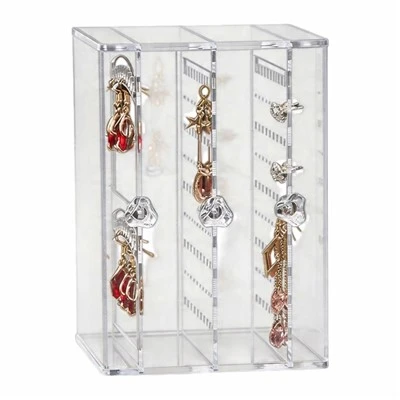
First, let’s get one thing straight: floor display stands aren’t just random racks. They’re engineered for a reason—fit through store entrances, stand steady on uneven concrete, hold enough product without cramping walkways, and look good enough to stop shoppers in their tracks. The “standard” dimensions depend on what you’re using the stand for, but I’ll start with the most common ones because that’s what 90% of our clients come asking about.
Let’s start with the basics people see every day: retail floor display stands for smaller products like mugs, phone accessories, or snack bars. These are the ones you’ll find by checkout counters or in mid-store aisles. The height here is non-negotiable for visibility—too short, and it gets hidden by a pile of shoes or a stack of boxes; too tall, and it’s a safety hazard for short shoppers or kids, plus it blocks the store’s signage. The standard height for these is between 48 inches and 60 inches. Wait, let me convert that to feet for anyone who’s not used to inches: that’s 4 feet to 5 feet. Makes sense, right? It’s eye level for most adults, and even when a small kid walks by, they can see the top shelf without straining.
Now the width and depth for these retail stands. Most shops have narrow aisles, so you don’t want a stand that sticks out 3 feet and blocks half the path. The standard width here is 24 inches to 30 inches. That’s about 2 feet to 2.5 feet. Depth? Same range, usually 12 inches to 18 inches. Why? Because if the stand is too deep, you’re wasting space on the floor that shoppers could use to walk, and if it’s too shallow, you can only fit a few products—no one wants a display that only holds 3 mugs. We’ve had clients test stands that were 20 inches deep, and they complained immediately because they had to rearrange their whole aisle layout to make it fit. That’s why the standard depth lands right at 15 inches, give or take.
But wait, what if you’re showcasing bigger stuff? Like apparel—t-shirts, hoodies, jeans. That’s where the standard shifts a little. Clothing floor display stands (the ones with hangers, right?) have different rules. The height here still needs to be visible, but since you’re hanging clothes, you need enough space below for the hem. The standard for a single-sided clothing floor stand is 60 inches to 72 inches (that’s 5 to 6 feet). Double-sided ones, which are popular because they show clothes from both sides, are a bit taller—up to 78 inches, max. Why not taller than that? Because if it’s over 6.5 feet, it’s too top-heavy, especially if you load it up with heavy denim. We’ve had a stand tip over during a trade show once because someone stuffed 10 hoodies on the top shelf—lesson learned: height has to pair with base weight.
Width for clothing stands is similar to the retail ones, but a bit wider for hanging space. Single-sided is 30 inches to 36 inches, double-sided is 48 inches to 60 inches. Depth here is a little different too—for hanging clothes, you need at least 18 inches of depth so hanger hooks don’t bump into each other. If the depth is only 12 inches, hangers will overlap, and customers can’t pick up a shirt easily. That’s a mistake we see a lot: cheap stands with too little depth, and the store ends up having to rearrange all their clothes to make it work.
Now, what about trade show floor display stands? Those are the ones you see at big events like CES or a local craft fair. These have to be portable, right? Because you’re loading them into a car or a booth. The standard here is a bit more compact, but still meets trade show rules—most venues have a maximum height limit of 8 feet (96 inches) for exhibits, so you can’t go over that. The width for trade show stands is usually 36 inches to 48 inches, and depth is 24 inches to 30 inches. Why? Because trade show booths are often 10×10 feet or 10×20 feet, so your display can’t take up more than a third of the space, otherwise you can’t walk around it. We once had a client who ordered a 6-foot wide trade show stand, and they ended up cramming it into a 10×10 booth—they had to turn around and get a smaller one, which cost them time and money. That’s why sticking to the standard 36-inch width is a safe bet for most small to mid-sized trade show booths.
Wait, let’s not forget the base. A lot of people ask, “Does the base size matter for standard stands?” You bet it does. If you have a 5-foot tall stand with a 12-inch wide base, it’s going to tip over. The base is what keeps it stable, so that’s a key dimension I don’t see enough people talk about. For the smaller retail stands I mentioned earlier (48-60 inches tall), the base standard is 18 inches to 24 inches square. For clothing stands, the base is a bit bigger—24 inches to 30 inches square, or for some freestanding ones, a rectangular base 20×30 inches. For trade show stands, since they’re often lighter (made of aluminum instead of metal), the base is even bigger—up to 36 inches square sometimes, to keep it from blowing over if there’s a ceiling fan or a draft in the convention center.
Now, let’s address the elephant in the room: why do some brands make non-standard stands? Because sometimes you have a specific need. If you’re a luxury brand selling high-end watches, you might want a narrower stand (18 inches wide) to fit next to a counter. If you’re selling kids’ toys, you might want a shorter stand (36 inches tall) so little ones can reach. But 9 times out of 10, the standard dimensions I just mentioned are the ones that work for most stores, trade shows, and events. We’ve found that when a client picks a standard stand, they don’t have to modify their aisle, their booth, or their product to make it fit. That saves them time and money, which is why standard stands are our bestsellers.
I should also mention material affects the dimensions too. A metal stand is heavier, so the base can be a bit smaller because it’s more stable. A plastic or aluminum stand is lighter, so the base has to be wider to compensate. That’s why when we’re designing standard stands, we factor in material weight as much as the height and width. For example, our standard metal retail stand has a 20-inch base, while our aluminum trade show stand has a 30-inch base—simple math to keep it from tipping.
Let me share a quick customer story to make this real. Last quarter, a small boutique owner came to us panicking. She’d ordered a custom floor display stand for her handmade candles, and it was 40 inches tall, 18 inches wide, but 24 inches deep. She said it stuck out so far in her narrow aisle that customers were tripping over it, and she couldn’t fit more than 8 candles on it. We suggested our standard retail candle display, which is 50 inches tall, 24 inches wide, 15 inches deep. It held 16 candles, fit in her aisle, and only took up half the floor space. She ordered 3 of them, and she’s been texting us ever since saying sales went up because her candles were easier to see. That’s exactly why standard dimensions matter—they’re not random numbers; they’re tested to work for real people’s spaces.
Wait, what about wall-mounted vs. floor stands? No, the question is about floor display stands, so I’ll stick to that. But just to clarify: floor stands are freestanding, so their dimensions have to account for not just how much product they hold, but how they move around. Standard floor stands are also designed to be assembled easily—most snap together in 10 minutes, no tools, which is why their width and depth are standardized. If they were too big, assembly would be harder, and if they were too small, you’d have to use extra parts.
Another thing: compliance. A lot of retail stores have safety rules from OSHA (in the US) or their local building codes. The standard dimensions I mentioned meet most of those rules. For example, OSHA says that floor displays can’t block more than 50% of an aisle, which is why the standard width of 24-30 inches fits in most standard 36-inch wide aisles. If you had a 36-inch wide stand, it would block almost the entire aisle, which is a hazard. That’s why standard dimensions aren’t just convenient—they’re safe.
Now, let’s wrap this up. The “standard” floor display stand dimensions aren’t one set number, but they’re grouped by use case:
- Small retail (mugs, snacks, accessories): 48-60 inches tall, 24-30 inches wide, 12-18 inches deep, 18-24 inch base.
- Apparel single-sided: 60-72 inches tall, 30-36 inches wide, 18-20 inches deep, 24-30 inch base.
- Apparel double-sided: 66-78 inches tall, 48-60 inches wide, 18-20 inches deep, 24-30 inch base.
- Trade show: 72-96 inches tall, 36-48 inches wide, 24-30 inches deep, 28-36 inch base.
That’s the sweet spot for almost every client we work with. If you’re not sure which one fits your needs, don’t overcomplicate it. As a floor display stand supplier, I’m here to help you figure out if you need a standard one, or if a custom tweak would work better. We don’t push overpriced custom stuff unless you actually need it—most of the time, the standard is exactly what you’re looking for.
Look, I’ve seen so many businesses waste money on stands that are too big, too small, or just don’t fit their space. The standard dimensions aren’t arbitrary—they’re based on years of working with stores, trade shows, and brands that need their displays to work, not just look good. Whether you’re a small boutique owner, a trade show organizer, or someone looking to showcase your products at a local market, sticking to these standard specs will save you a ton of hassle.

If you’re ready to find the right floor display stand for your space, or you have questions about dimensions, just reach out. We can walk through what you’re showcasing, where you’re placing it, and point you to the standard stand that fits like a glove. No weird hoops, no hidden fees—just honest advice from someone who’s been in the display game for years.
Vape Display References
- Retail Fixture and Display Association. (2022). Standard Dimensions for In-Store Merchandising Displays.
- Trade Show Industry Association. (2023). Booth and Display Size Guidelines for Events.
- Occupational Safety and Health Administration (OSHA). (2021). Aisle Clearance and Display Safety Standards for Retail Spaces.
- Small Business Administration (SBA). (2022). Merchandising Tips for Small Retail Businesses.
Shenzhen Xingzhong Display Products Co., Ltd.
As one of the most professional floor display stand suppliers in China, we’re featured by quality products and good service. We warmly welcome you to buy customized floor display stand made in China here from our factory. If you have any enquiry about quotation and free sample, please feel free to email us.
Address: 80 Tangkeng Road, Biling Street, Pingshan District, Shenzhen, Guangdong Province
E-mail: leo@xzdisplay.com
WebSite: https://www.xzdisplay.com/
