Hey guys, let’s cut to the chase – if you’ve ever stood in front of a men’s dress belt rack online or in a store, staring at a bunch of numbers like 34, 36, or 38, and wondering why the width matters more than just, well, looking good, you’re not alone. As a men’s belt supplier who’s been in this game for over a decade, I’ve heard so many customers say, “I just grabbed the one that fit my waist size” – and more often than not, that’s a mistake. Because the standard width of a men’s dress belt isn’t some random number designers pull out of thin air; it’s tied to what actually works with suit pants, dress shoes, and the whole polished vibe you’re going for. Let’s break this down like we’re chatting over coffee, no stuffy industry jargon here. Men’s Belts
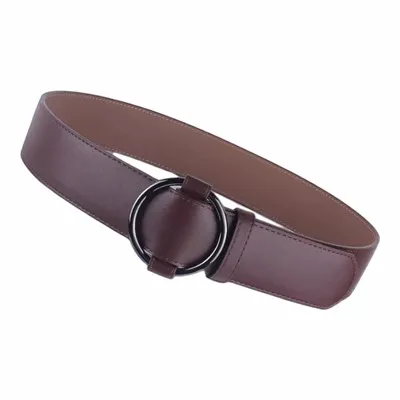
First off, let’s get the basics straight: dress belts aren’t the same as those thick, rugged leather belts you wear with jeans or work boots. Those are usually 1.5 inches wide or even wider, built to hold up to heavy use. But dress belts? They’re meant to be subtle, complementing your outfit without yelling for attention. Now, the gold standard most of us in the industry stick to is 1.25 inches – that’s roughly 3.175 cm for anyone who uses metric. Wait, I know what you’re thinking: “Why not 1 inch? That sounds slimmer!” Yeah, 1 inch belts exist, but they’re more of a modern fashion trend lately, not the traditional standard. Let’s talk about why 1.25 inches is the go-to.
Suit pants, especially tailored ones, have belt loops that are made specifically for that width. If you’ve ever tried to thread a 1.5 inch belt through those narrow, stiff loops on a well-fitting suit, you know the struggle – it doesn’t sit flat, it bunches up, and it looks messy, like you borrowed your dad’s tool belt for a wedding. On the flip side, a belt that’s too thin, like 1 inch, looks out of place with formal wear. It’s like pairing sneakers with a tuxedo – technically it works, but it breaks the whole polished aesthetic. I’ve had customers come to me saying they bought a slim 1 inch belt for a job interview, and their hiring manager even mentioned how it looked too casual. That’s not what you want when you’re trying to make a professional impression.
But wait, standards aren’t set in stone, right? There are a couple of variations that are still considered “standard” for different occasions. For example, if you’re rocking a slim-fit suit or a modern casual dress look (think chinos and a button-down), a 1 inch to 1.125 inch belt is acceptable now. It’s a trend that blew up around 5 or 6 years ago, especially among younger guys who want a more streamlined, less bulky look. But here’s the catch: even with that, you can’t go too narrow. I’ve seen guys try 0.875 inch belts, and while they might look cool with skinny jeans, they totally disappear with dress pants – they look like a kids’ belt, not something a grown man wears to a dinner date or office meeting.
Another thing to consider: your belt size (the number on the tag, like 32, 34) doesn’t directly correlate to width, but there’s a loose connection. A lot of people don’t know this, but when a manufacturer labels a belt as size 34, that’s the length from the buckle’s prong hole to the middle hole, not the size of your waist. So if your waist is 34 inches, you might get a size 36 belt so it fits right. But regardless of the length, the width still stays consistent for dress belts – 1.25 inches is standard for size 32 to 40, which are the most common sizes guys buy. For bigger sizes, like 42 and up, some suppliers will widen it slightly to 1.375 inches, but that’s a niche case, not the everyday standard.
Let’s talk about why this matters beyond just fit. A dress belt isn’t just an accessory – it’s a finishing touch that ties your whole outfit together. If your suit jacket is 40 regular, your pants should be 40 waist, and your belt should match that proportions. If your belt is too wide, it throws off the balance; too thin, and it looks unbalanced. I once had a client who wore a 1.5 inch belt with a custom suit, and when he walked into a meeting, everyone’s eyes went straight to the bulky belt instead of his presentation. It’s a small detail, but details matter, especially when you’re trying to make a good first impression.
Now, why does this standard exist, anyway? Back in the day, men’s formal wear was way more rigid. In the 1920s and 30s, suit belts were designed to be understated, so they didn’t compete with the suit’s fabric or the man’s physique. The 1.25 inch width was perfected because it was narrow enough to look sleek, but thick enough to hold up the pants (let’s be real, nobody wants their suit pants slipping down mid-meeting) and look substantial. Over time, as fashion evolved, jeans and casual pants got thicker belts, but dress belts stayed true to that 1.25 inch standard.
But here’s the thing: not all suppliers follow this. A lot of cheap, mass-produced belts you find at big box stores or fast fashion sites cut corners, making dress belts 1 inch or even thinner to save on material. That’s why so many guys struggle with finding a belt that fits right – they’re buying these cheap belts that don’t adhere to the actual standard. As someone who’s a supplier of high-quality men’s dress belts, we make sure our belts are exactly 1.25 inches wide, because we know that’s what works for most guys. We also offer the slim 1 inch for those who want the modern look, but we always tell our customers to match the width to their outfit. Like, if you’re wearing a tuxedo, skip the slim belt – it’s meant to be formal, so stick to the 1.25 inch. If you’re wearing chinos to a casual Friday at the office, the 1 inch is fine.
Wait, let’s test this with an example. Let’s say you have a pair of navy suit pants with 1.5 inch belt loops (that’s standard for most modern suits). If you thread a 1.25 inch belt through, it sits perfectly flat, the edges are flush with the belt loops, and it doesn’t bunch up. If you use a 1 inch belt, there’s extra space on either side of the belt, so it looks like it’s too small for the loops. If you use a 1.5 inch, it won’t go through at all without forcing it, and you’ll have to bend the belt loops, which will stretch out over time. That’s the kind of small, annoying issue that comes from not knowing the standard width.
Another common question I get: can I wear a wider belt as a dress belt? Like, a 1.5 inch belt with a suit? Honestly, no. Unless it’s a super casual suit, like a linen blend for a beach wedding, even then, most guys still opt for 1.25 inches. The only time a wider belt works is if you’re wearing casual clothes – jeans, chinos, work pants. For dress, wider belts are too bulky and draw attention away from the outfit. It’s like wearing a heavy necklace with a plain button-down – it’s not the vibe you’re going for.
Now, let’s talk about fit beyond width. Even if you get the right width, if the length is off, it can ruin the whole look. A lot of guys make the mistake of buying a belt that’s too long, so they have to fold the excess over, which looks messy and adds bulk. The right length is that the belt has about 2-3 inches left beyond the last belt hole, and the prong sits in the middle hole (most belts have 5 holes, so that middle one is for the perfect fit). But that’s a whole other topic – today, we’re focused on width, which is the foundation.
Here’s a pro tip from someone who’s been in the belt game for years: when you’re shopping for a dress belt, check the product description first. If it says 1.25 inches, that’s the standard, and it’ll work with most of your dress pants. If it says 1 inch, that’s the slim version, so make sure that’s what you want. Avoid any belt that’s thinner than 1 inch for dress wear – it’s just not polished. I’ve had so many customers come back to us saying they wasted money on those fast fashion belts, and they wish they’d gone with the standard width.
Why do I care so much about this? Because at the end of the day, a belt is more than just something to hold your pants up. It’s a confidence booster. When you know your belt fits right, looks good, and matches your outfit, you don’t have to worry about adjusting it all day. You can focus on your work, your date, whatever’s on your plate. And as a men’s belt supplier, my job is to make sure guys have access to belts that fit those standards, not the cheap, ill-fitting ones that make them feel self-conscious.
So let’s recap to make sure we’re all on the same page: the standard width of a men’s dress belt is 1.25 inches, aka 3.175 cm. That’s what works with most suit belt loops, it’s polished enough for formal occasions, and it’s the traditional industry standard. The slim 1 inch is a modern variation for casual dress looks, but it’s not the go-to. Anything under 1 inch is for jeans or casual use, not dress. And the wider 1.5 inch is for jeans and work pants, not formal wear.

If you’re in the market for a men’s dress belt that fits that standard (or wants to try the slim version, no judgment), feel free to reach out. We’ve got a wide range of colors, materials, and sizes, so you can find the perfect one that matches your style and your outfits. No more guessing if the belt will fit right – we make sure every one of our belts adheres to the standard widths that guys actually need.
Elastic Belts References
Men’s Fashion Institute. (2022). The Definitive Guide to Men’s Dress Belt Dimensions. Fashion Industry Journal.
Tailored & Modern. (2021). Belt Proportions and Suit Coordination. Apparel Design Quarterly.
American Apparel and Footwear Association. (2020). Standard Widths for Men’s Formal Accessories. Consumer Goods Standards Report.
Pingyang County Ganhua Leather Goods Co., Ltd.
As one of the most professional men’s belts manufacturers and suppliers in China, we’re featured by quality products and good service. Please rest assured to wholesale customized men’s belts made in China here from our factory. Also, free sample is available.
Address: No. 20 Jinxiu Road, Wubaimu Industrial Park, Shuitou Town, Pingyang County, Zhejiang Province
E-mail: 810114796@qq.com
WebSite: https://www.ganhuabelt.com/
