If you’ve ever ordered a research reagent, you know how much time and effort goes into designing your experiment: tweaking concentrations, optimizing incubation times, and validating assay protocols—only to hit a wall waiting for your materials. For peptide researchers, this bottleneck often centers on catalog peptides: the pre-made sequences that are perfect for quick validation, Western blots, ELISAs, or preliminary drug screening. As a catalog peptide supplier, I field this question every single day: “How long does it take to get my order after I hit ‘confirm’?” The answer isn’t as straightforward as you might think, but let me walk you through the process step by step, break down the factors that impact timelines, and give you a realistic sense of when you can expect those peptides on your bench. Catalog Peptides
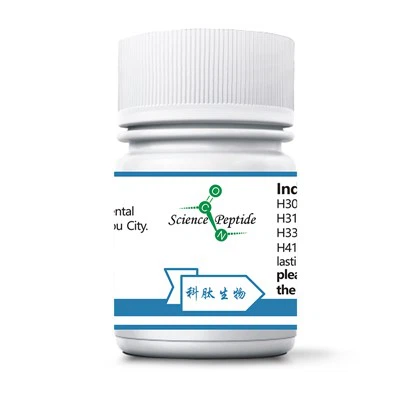
First, let’s set the baseline: most of our in-stock catalog peptides ship within 24 to 48 hours. But before we get into exceptions, it helps to understand how our core inventory system works. We keep a library of over 12,000 commonly used sequences—things like β-amyloid fragments, common epitope tags (His-tag, Myc-tag, FLAG-tag), growth factors, signaling peptides, and peptide inhibitors that researchers use on a weekly basis. We synthesize these in consistent batches, purify them via HPLC, verify their identity with mass spec, and store them in temperature-controlled freezers so we can grab them the second an order comes in. That immediate availability is intentional: we know waiting even 3 days for a standard peptide can derail a short-term experiment, so we structured our workflow around speed for these high-demand items. For example, a researcher ordering a 15-amino acid His-tagged control peptide for a Western blot will almost always see that order leave our facility within 24 hours of being processed, via standard courier. For domestic orders (within the U.S., for context), that usually translates to 2–3 business days of shipping time, so total turnaround from order placement to delivery is 4–5 business days. International orders take 5–7 business days on average, though some regions like Western Europe or Canada are faster, while others (like parts of Asia or South America) can add another 3–4 days due to customs clearance.
But what if your peptide isn’t in stock? That’s where timelines start to shift, and it’s a common point of confusion. Not every sequence is a household name in research, so we have two categories of non-stock catalog peptides: custom-length variants and less common sequences. If you order a peptide that’s structurally similar to a stock item—say, a 20-amino acid version of a 15-amino acid stock sequence, or a minor mutation to a well-known signaling peptide—we can often repurpose existing synthesis plans to make it quickly. For these “near-stock” items, lead time is typically 3–7 business days, plus shipping. The longer end of that range comes into play if we need to adjust purification protocols or run an extra mass spec check to confirm the modified sequence. For truly unique catalog peptides—things like rare viral epitopes, custom neuropeptides, or sequences for understudied protein targets that we don’t synthesize regularly—lead time jumps to 10–14 business days. Why so long? Because we have to source raw materials specific to that sequence: protected amino acids that aren’t in our regular inventory, special resins for solid-phase peptide synthesis (SPPS) that match the peptide’s hydrophobicity, or even custom conjugation reagents if your order includes a tagged or labeled peptide. That extra sourcing step adds days, as does scaling the synthesis batch to meet your requested quantity—especially if you’re ordering milligram quantities, which are common for in vivo studies or large-scale assays.
Another factor that impacts wait times is the specifications of your order. Peptides aren’t one-size-fits-all, and every custom request adds time, even if the base sequence is in stock. Let’s break down common add-ons and how they shift timelines. First, purity grade: our standard catalog peptides have 70–80% purity, which is perfect for quick in vitro assays, cell culture controls, or ELISAs. If you need higher purity—95% for Western blots, 98% for functional assays, or 99% for structural work—we have to run an extra preparative HPLC step. That adds 1–2 business days to processing, since we’re purifying and re-verifying the peptide after synthesis. Labeling is another big one: biotinylation, fluorescent tags (FITC, Cy3, Alexa Fluor), or radioisotope labels require an extra conjugation reaction after peptide synthesis, plus a separate purification and identity check. For a stock peptide with a simple biotin tag, that’s an extra 2–3 days; for a fluorescently labeled peptide, which requires more careful handling to avoid degradation, it’s 3–5 extra days. Quantity also matters: ordering a 1-milligram sample of a common peptide is straightforward, but ordering 100 milligrams for a large-scale purification or animal study requires scaling the synthesis batch, which often means adjusting our synthesis protocol to avoid side reactions—adding another 2–4 days of processing time.
Shipping conditions play a smaller but still notable role too. Peptides are generally stable at room temperature for short periods, but for long-term storage and sensitive applications, we ship them on dry ice to keep them frozen, especially for labeled peptides or peptides that degrade at higher temperatures. If your order needs dry ice shipping, that can add 1 day to processing time, as we coordinate with couriers to ensure the package is picked up during their next dry ice run, rather than a standard same-day shipment. Weather delays are also a real factor: a winter snowstorm in the Midwest U.S. can slow ground shipping by 2–3 days, while international shipments can get held up in customs during peak holiday seasons, adding another 5–7 days of unexpected wait time. We always include a note about these potential delays in order confirmations, but I know it’s frustrating when a timeline shifts due to something out of our control.
Now, let’s address a common question: can we ever get a catalog peptide faster than the standard timelines? The short answer is yes—we offer an expedite service for urgent orders, though it’s only available for in-stock or near-stock items. If you mark your order as urgent before 12 PM Eastern Time, we can often process and ship it the same day, cutting the processing time to just a few hours. For expedited shipping, we work with premium couriers like FedEx or DHL, so domestic urgent orders can arrive as soon as the next business day, while international urgent orders can take 2–3 business days. We reserve this service for true emergencies: if your experiment is scheduled to start tomorrow and you missed the standard order window, or a control peptide failed an assay and you need a replacement immediately. It’s not a shortcut for non-stock peptides, though—we can’t rush a full synthesis batch or source rare raw materials overnight.
Over the years, we’ve learned that transparency around timelines is way more helpful than vague promises of “fast delivery.” That’s why on our order pages, every catalog peptide has a clear “lead time” listed right under the product details, along with notes about purity, labeling, and quantity add-ons that might shift that timeline. For example, if you look up a common insulin peptide, it says “In stock: ships in 24–48 hours; 98% purity adds 1 day, biotin tag adds 2 days.” That way, you can plan your experiment accurately, instead of waiting around for a peptide that’s actually on a 7-day lead time because you didn’t check the purity specification. We also send automated order updates: when your order is processed, when it’s shipped, and when it’s out for delivery, so you don’t have to guess where it is.
I’ll be honest with you—no supplier can make a one-of-a-kind catalog peptide arrive in 2 days. SPPS is a precise, multi-step process that can’t be rushed without sacrificing quality, and that’s non-negotiable for us. A peptide that’s not correctly synthesized, purified, or identified is useless for your experiments, and we’d rather you wait an extra few days for a high-quality product than have you waste weeks troubleshooting a flawed reagent. For example, a few months ago, a researcher ordered a rare C-peptide for a diabetes study, and we quoted a 12-day lead time. They pushed for expedite, and we explained that sourcing the custom protected amino acid alone would take 5 days, so rushing would mean cutting corners on purification. They ended up waiting the full 12 days, and later told us that the peptide worked perfectly on the first try, saving them weeks of time that they would have lost if they’d received a lower-quality, rushed product.
Another thing I want to clarify: “catalog peptides” are different from custom peptides, and timelines reflect that. Custom peptides are built from scratch for a unique sequence, with lead times of 2–4 weeks, but catalog peptides are pre-existing, which is why they’re so fast. That’s the value of catalog peptides: they’re a middle ground between time-consuming custom synthesis and slow reagent stock, perfect for researchers who need a reliable, standard sequence without the wait.
If you’re still not sure about your timeline, our customer support team is always available to check your specific order before you place it. If you send us the catalog number of the peptide you want, along with any custom requests (purity, labeling, quantity), we can give you an exact timeline before you even submit your order. We’ve had researchers order peptides at 5 PM on a Friday, and we’ve gotten them a lead time update within 10 minutes, so they don’t have to stay up worrying about whether their order will arrive in time for their experiment.
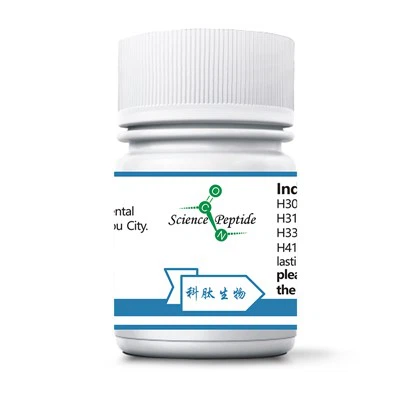
At the end of the day, we know that your work matters. Every peptide you order is a small piece of a larger project—whether that’s a new cancer drug, a better way to diagnose diabetes, or a breakthrough in neuroscience. We don’t just sell reagents; we help keep your research on track. That’s why we work hard to get catalog peptides to you as fast as possible, without cutting corners on quality. If you have questions about your next order, want to discuss a specific sequence, or need help planning your peptide supply for an upcoming project, our team is here to help. Reach out to us to discuss your requirements, and we’ll make sure you have all the details you need to keep your experiment moving forward.
Anti-cancer Peptides References
- Chan WC, White PD. Fmoc Solid Phase Peptide Synthesis: A Practical Approach. Oxford University Press; 2000.
- Pennington MW, Dunn BM. Peptide Synthesis and Applications. Humana Press; 1994.
- Lindner W, Niessner R. Peptide Analysis by HPLC and Mass Spectrometry. Journal of Chromatography A. 1997;777(1-2):19-45.
- Smith BJ. Preparative High-Performance Liquid Chromatography of Peptides. Journal of Liquid Chromatography. 1985;8(16):2839-2862.
Shanghai Science Peptide Biological Technology Co., Ltd.
As one of the most professional catalog peptides manufacturers and suppliers in China, we also support custom service. We warmly welcome you to wholesale bulk high quality catalog peptides from our factory. If you have any enquiry about cooperation, please feel free to email us.
Address: 11th Floor, Building 4, No. 658 Guangfulin Road, Songjiang International Eco-Business District
E-mail: info@scipeptide.com
WebSite: https://www.scipeptide-global.com/
