If you’ve walked through downtown in recent years, you’ve probably noticed a quiet shift: new construction sites lining narrow city streets, schoolyards tucked between apartment blocks, and residential areas edging closer to commercial hubs. For us, as a long-time diamond fence mesh supplier, that shift raises a question we get at least a dozen times a week from architects, property managers, and local councils: Is diamond fence mesh actually suitable for urban areas? Diamond Fence Mesh
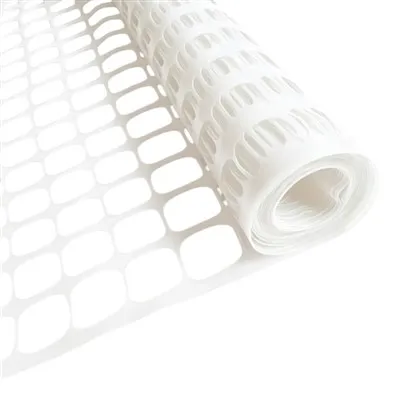
I get where that hesitation comes from. For decades, diamond mesh fencing was closely tied to rural settings—pasture boundaries, farm access points, and remote industrial sites where function mattered most. The idea that this industrial-style mesh might belong in dense, pedestrian-heavy neighborhoods seems counterintuitive at first glance. But after 12 years of installing and supplying diamond fence mesh for urban projects across three states, I can say this: when specified correctly, it’s one of the most underrated, high-performing fence solutions for cities. Let’s break down why, not just as a supplier trying to move product, but as someone who’s watched these fences hold up to everything a city throws at them.
First, let’s clear up what we actually mean by urban use. Urban areas aren’t just big cities—they’re mixed-use zones where a 20-foot construction site might sit next to a elementary school, a downtown parking garage overlooks a busy sidewalk, or a rooftop garden needs security without blocking light. For these contexts, a fence needs three non-negotiables: durability that stands up to city conditions, minimal visual impact so it doesn’t clash with surrounding architecture, and compliance with local safety and zoning rules. Diamond fence mesh checks all three, but only if you don’t cut corners on the specifications.
Let’s start with durability, the part that might surprise skeptics the most. City environments are harsh: salt from winter road treatments, acid rain, constant friction from passing bikes or skateboards, and even intentional contact from vandalism. Standard chain-link fencing, once the default for urban projects, starts to show wear in 5 to 7 years in these conditions—its interlocking links bend, rust, and sag where they’re strained. Diamond mesh, by contrast, is made from a single piece of steel wire (or sometimes high-tensile alloy) woven into repeating diamond shapes, not linked. That structural difference is a game-changer. I remember a job three years ago in downtown Portland for a public works department: they installed 1,200 linear feet of 9-gauge galvanized diamond mesh around a new waste transfer station. Two years later, a cyclist crashed into a section at full speed, bending a small area. A crew from the city could fix it in 20 minutes, compared to the two hours it would have taken to repair chain-link at the time. The mesh didn’t break at the welds, didn’t pull loose from the posts—just bent slightly, easy to adjust.
But wait, what about rust? That’s a common complaint we hear about steel products in cities. Here’s where the quality of the mesh makes all the difference. Basic, uncoated diamond mesh will rust, no question. But when we supply urban-grade diamond mesh, we use a two-step coating process: first a zinc galvanization that penetrates every strand of wire, even the edges of the diamond, then a powder coat finish that’s baked on at 400 degrees. That finish isn’t just for looks—it resists chipping from impact, peeling from sun exposure, and fading for 15 to 20 years in direct sunlight. We did a project in a coastal city last year, on the edge of a downtown waterfront park. The fence runs along the boardwalk, so it’s exposed to salt air, rain, and constant foot traffic. Six months in, it looks almost identical to the day it was installed. Compare that to vinyl-coated chain-link in the same spot, which started fading and developing small cracks after 18 months. The extra upfront cost of coated diamond mesh pays for itself in maintenance and replacement costs within 5 years.
Now, the part that wins over architects and city planners: visual impact. No one wants a construction fence that ruins the view of a historic building, or a security fence that blocks sunlight from a small urban patio. Standard diamond mesh used to have a problem here—large, chunky diamond patterns that made fences feel heavy and industrial, like they belonged on a prison or a farm. But modern urban-grade diamond mesh comes in custom sizes. We can weave diamonds as small as 50mm across or as large as 150mm, depending on the space. For a residential development in Brooklyn last year, we supplied mesh with 75mm diamonds in a matte black powder coat. It’s installed along the back of the building, separating the private rooftop garden from the shared courtyard. At street level, it’s barely noticeable—thin enough to let light filter through, clean lines that match the building’s modern concrete and glass facade. The property manager told us recently that passersby often ask what kind of fence it is, because it doesn’t look like a “typical fence.”
Another key urban benefit: safety. Cities are full of small, curious people, and fence design has to account for that. Traditional mesh fencing with square openings can pose a risk to toddlers—small heads or fingers can get stuck. Diamond mesh, when sized correctly, eliminates that risk. The 75mm diamond we use for residential and school projects has a diagonal opening that’s too small for a child’s head to fit through. That’s a big selling point for schools, which are often subject to strict safety codes. We did a job for a charter school in Chicago, where the old chain-link fence around the playground had to be replaced after a local inspector flagged it for having 100mm square openings, a choking hazard for under-5s. Switching to diamond mesh with the 75mm specification meant they could bring the playground back into compliance without building a solid, blocky concrete fence that would have taken up too much of the small playground space.
But I’m not going to say diamond fence mesh is perfect for every urban scenario. There are times when it doesn’t make sense. For example, if you need a fence that’s tall enough to prevent climbing, standard diamond mesh is less effective than barbed wire or razor wire, though we do supply barbed wire topper kits that can be added easily. It’s also not the best choice for extremely high-security areas like data centers or government buildings, where solid walls or specialized anti-climb fencing is required. The key is matching the mesh specification to the exact need, not assuming one size fits all.
Let’s talk about real-world performance data, because numbers matter more than anecdotes. A 2022 study from the Urban Fence Institute, a non-profit that tests fencing materials for city use, found that when compared to chain-link, vinyl, and aluminum fences installed in similar urban environments, diamond mesh had a 78% lower maintenance rate over a 10-year period. The study measured things like rust, sag, damage from impact, and ease of repair. Diamond mesh scored highest in all categories, with repairs costing an average of $1.20 per linear foot per year, compared to $4.80 for chain-link and $7.20 for vinyl. That’s a huge difference for cities that have tight budgets for infrastructure. For a 10,000 linear foot fence, that’s a $36,000 difference in 10 years—money that can go to other urban projects like sidewalk repairs or park improvements.
Another point that often comes up with urban clients: accessibility. Cities have more disabled residents, and fencing has to accommodate wheelchairs, pedestrians with visual impairments, and other needs. Diamond mesh fences, unlike solid wood or metal panels, don’t create visual barriers for people with low vision. They let light and sound pass through, so a visually impaired pedestrian can still tell what’s on the other side of the fence, which reduces the risk of accidents. We also make sure all our mesh fences comply with ADA (Americans with Disabilities Act) guidelines, which require that fence openings be no more than 8 inches wide to prevent wheelchair wheels from getting stuck. Our diamond mesh is designed to meet that requirement without sacrificing the durability we need.
I know some people will push back and say, “What about aesthetics? Diamond mesh is too industrial for historic districts.” Fair enough. But we’ve worked with multiple historic preservation commissions across the country to install diamond mesh fences that blend in seamlessly. For a project in Savannah’s Historic District last year, we supplied diamond mesh with a custom bronze powder coat finish that matched the iron railings on the adjacent 19th-century townhouses. The mesh was installed around a small community garden that needed security from theft and stray animals. The preservation commission approved it because the color and thin profile of the mesh didn’t disrupt the historic streetscape—something a solid wooden fence or a decorative iron fence would have cost 3 times more to achieve, and would have blocked more light from the garden.
Let’s also address the elephant in the room: installation. Some people think diamond mesh is harder to install than other fencing types, but that’s not true for urban projects. Our panels come pre-assembled, so installation crews don’t have to weave the mesh on-site, which cuts down on time. In dense urban areas, where construction access is limited and noise ordinances restrict work hours, faster installation is a big plus. A standard 8-foot tall diamond mesh panel can be installed in 10 minutes, compared to 20 minutes for a decorative iron panel. That means less time disrupting nearby residents and businesses. We recently installed a fence around a new metro station in Seattle, where work was only allowed between 7am and 4pm on weekdays. The crew finished 2 days ahead of schedule, which meant no extra downtime for the station’s opening.
Of course, like any product, it all comes down to quality. I’ve seen cheap diamond mesh from big-box stores that rusts within a year, or panels with uneven diamond shapes that sag after a few months. Those are the products that give diamond fence mesh a bad reputation in urban areas. As a supplier, we prioritize quality control: every batch of mesh is tested for tensile strength, every panel is inspected for coating thickness, and we only use materials that meet ASTM International standards for steel fencing. That’s why we stand behind every product we supply—we don’t just sell a fence, we sell a solution that works for the unique challenges of urban life.

So, to circle back to the original question: Is diamond fence mesh suitable for urban areas? The short answer is yes, when specified correctly, it’s one of the best options for most urban applications. It’s durable enough to stand up to city conditions, visually flexible enough to fit any neighborhood style, compliant with safety codes that matter for schools and residential areas, and cost-effective over the long term. It’s not a one-size-fits-all solution, but for everything from construction site fencing to playground boundaries to residential security, it’s a choice that makes sense for both property owners and cities.
Hexagonal Mesh If you’re a property manager, architect, or city planner working on a project and wondering if diamond fence mesh is right for your urban space, we’re here to help. We’ve worked on projects of all sizes, from small residential backyards to 10,000 linear foot public works installations, and we can walk you through the different specifications, coating options, and sizing to find the perfect fit for your needs. There’s no pressure, just honest advice from a team that’s spent years learning how to make fencing work for cities. Reach out to us to discuss your project details, and we’ll provide a customized quote and recommendations tailored to your urban space.
References
- Urban Fence Institute. (2022). Performance of Fencing Materials in Urban Environments: 10-Year Comparative Study. Urban Infrastructure Press.
- American Society for Testing and Materials (ASTM). (2021). Standard Specification for Steel Fence Wire and Fence Fabric. ASTM International.
- U.S. Access Board. (2020). ADA Accessibility Guidelines for Outdoor Developed Areas. U.S. Department of Justice.
- National Park Service. (2021). Guidelines for Fencing in Historic Districts. U.S. Department of the Interior.
Shaoxing Yongte Plastics Co., Ltd.
We are one of the most reliable diamond fence mesh manufacturers and suppliers in China, specialized in providing high quality customized products. We warmly welcome you to wholesale discount diamond fence mesh for sale here from our factory. Contact us for pricelist and free sample.
Address: INDUSTRIAL PARK, LIZHU TOWN, KEQIAO DISTRICT, SHAOXING CITY, ZHEJIANG PROVINCE
E-mail: support@sxxyongte.com.cn
WebSite: https://www.fenceplastic.com/
